 +91 7776966133
 theearthingworld@gmail.com
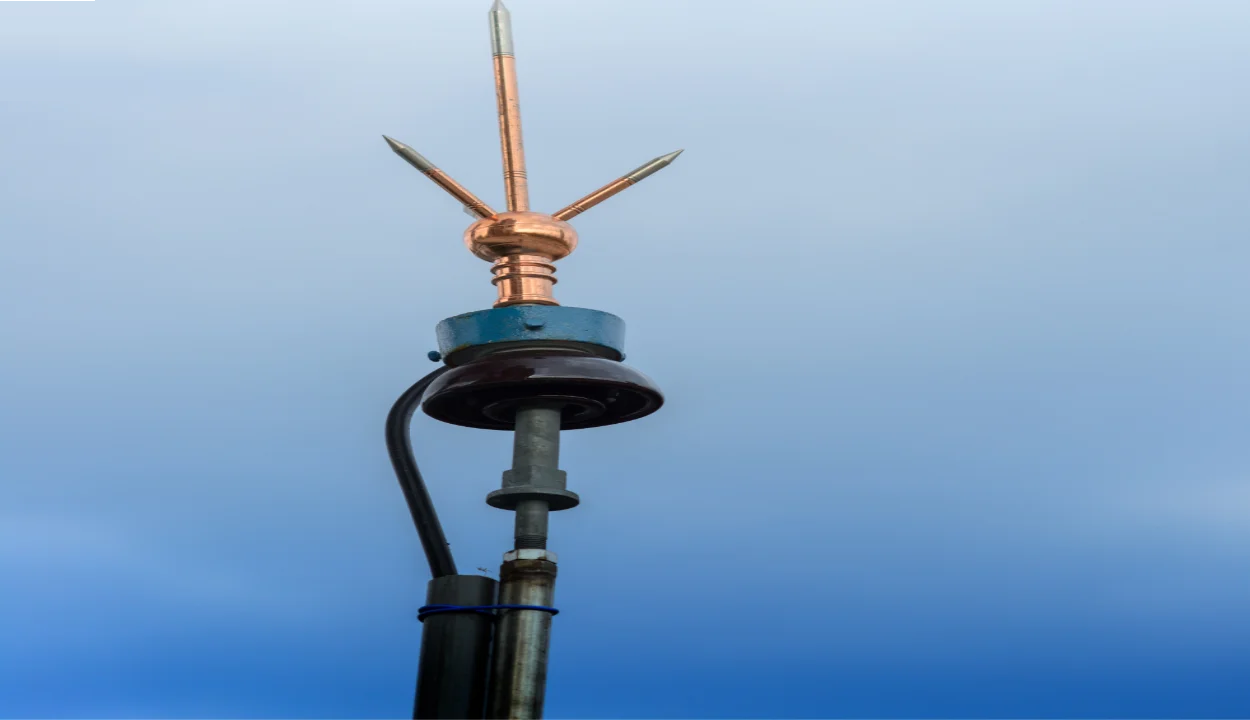
Lightning Arrester is a vital safety device designed to protect electrical installations and structures from lightning strikes and surge voltages. It safely diverts high-voltage lightning currents into the ground, preventing damage to equipment and infrastructure.
These arresters are widely used in residential buildings, commercial complexes, industrial plants, substations, and telecom towers to ensure maximum protection against lightning-induced surges.
Key features
- Efficient dissipation of lightning surge current
- High mechanical strength and durability
- Corrosion-resistant and weatherproof construction
- Low impedance path to ground
- Reliable performance in extreme conditions
- Easy installation and long service life
Lightning arresters provide a controlled path for lightning energy, ensuring that dangerous surge currents are safely discharged into the earthing system without affecting electrical equipment.

Surge protection
Protects electrical systems from lightning and overvoltage surges.

High reliability
Ensures consistent protection with minimal maintenance.
Why choose lightning arrester
Lightning arresters are essential for safeguarding structures and electrical systems from unpredictable lightning strikes.
Designed to meet industry safety standards, lightning arresters are trusted for their effectiveness, durability, and ability to minimize downtime and equipment damage.
Technical Specifications
| SR | Property | Value |
|---|---|---|
| LA-1 | Material | Copper / GI / Aluminium |
| LA-2 | Peak Current Capacity | High |
| LA-3 | Corrosion Resistance | Excellent |
| LA-4 | Mounting Type | Roof / Structure mounted |
| LA-5 | Application | Lightning protection system |
Common questions about lightning arrester
A lightning arrester is a device that safely diverts lightning surge currents to the ground to protect structures and equipment.
They are used on buildings, substations, telecom towers, factories, and power installations.
They provide effective surge protection, reduce equipment damage, improve safety, and ensure system reliability.